This article documents bilabial-trill release of dental stops in the Central dialect of Zazaki, a Northwest Iranian language of eastern Turkey. The data analyzed here come from recordings of an adult female native speaker from a village in the western part of Genç, a district of Bingöl Province, in the audio corpus published on zazacaogren.com [1].
Bilabial-trill release recurs across multiple lexical items in the Genç recordings. The contrast between plain dental stops and bilabially post-trilled dental stops can be demonstrated by the following minimal pairs: [t̪ʰɪ] ‘2.SG.DIR’ (the personal pronoun ‘you’ in direct case) versus [t̪͡ʙ̥ɪ] ‘2.SG.OBL’ (the same pronoun in oblique case), and [d̪ɪ] ‘two’ versus [d̪͡ʙɪ] ‘ayran’ (a salted yogurt drink).
Typological Context
Bilabial trills are extremely rare in human languages. Olson’s cross-linguistic discussion argues that a plain bilabial trill phoneme /ʙ/ is not securely attested as an independent phoneme [2]. The narrower type relevant here is a dental or alveolar stop released into a bilabial trill.
The sources consulted for this article identify only six languages with published descriptions of dental or alveolar stop-plus-bilabial-trill realizations. Olson describes Abkhaz, an endangered Northwest Caucasian language, as having labialized alveolar stops such as /tʷʼ tʷ dʷ/ that may be realized as labial-alveolar [tpʼ tp db], optionally with bilabial-trill release [tpᴘʼ tpᴘ dbʙ]; he reports the same pattern for Ubykh, an extinct Northwest Caucasian language [2]. Similar dental or alveolar stop-trill categories are also reported in Wari’ and Oro Win, endangered Chapacuran languages of western Brazil [3] [4]; Itene/Moré, an endangered Chapacuran language of the Bolivia-Brazil border region [5]; and Sangtam, a Tibeto-Burman language of Nagaland in northeastern India [6].
Video Evidence of Bilabial-Trill Release
The close-up videos below show a contrast between four minimal-pair forms with the same vowel quality: [t̪ʰɪ] ‘2.SG.DIR’, [t̪͡ʙ̥ɪ] ‘2.SG.OBL’, [d̪ɪ] ‘two’, and [d̪͡ʙɪ] ‘ayran’.
Voiceless pair: [t̪ʰɪ] ‘2.SG.DIR’ and [t̪͡ʙ̥ɪ] ‘2.SG.OBL’
Voiced pair: [d̪ɪ] ‘two’ and [d̪͡ʙɪ] ‘ayran’
Still Frames of the Voiceless Trill Release
The still frames below are selected from the slow-motion video of [t̪͡ʙ̥ɪ] ‘2.SG.OBL’. They show the alternating closed and open lip positions during the bilabial-trill release.
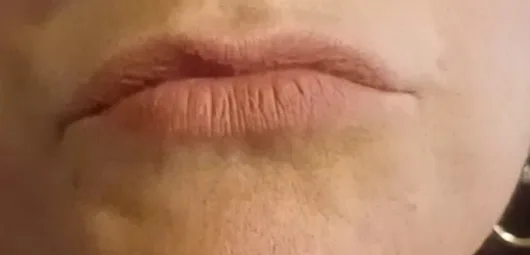
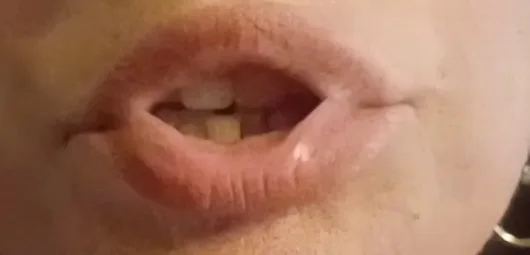
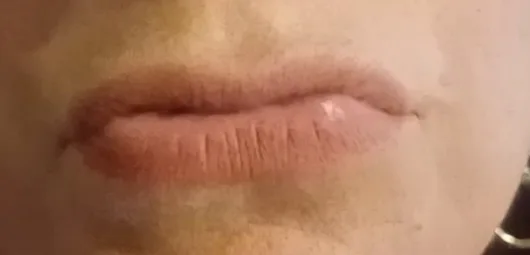
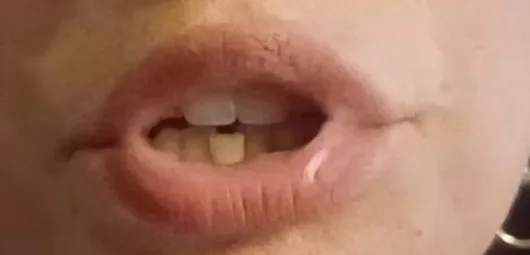
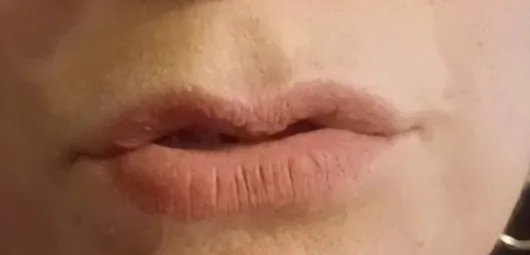
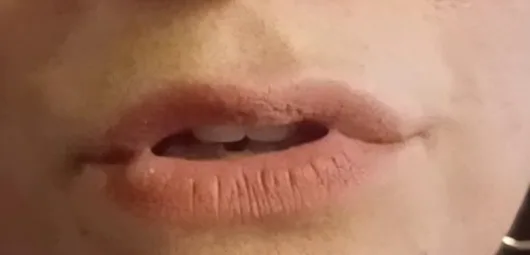
Spectrogram and Rectified-Envelope Evidence
The figures below show spectrograms plotted on a shared 500 ms scale, with the rectified amplitude envelope overlaid in white. This makes the timing of closure, release, pulsing, and vowel onset directly comparable across the four forms. In the labialized forms, the main acoustic burst marks the transition from closure into bilabial-trill release at about 60 ms in [t̪͡ʙ̥ɪ] ‘2.SG.OBL’ and about 150 ms in [d̪͡ʙɪ] ‘ayran’.
[t̪ʰɪ] ‘2.SG.DIR’
![Spectrogram and rectified envelope for [t̪ʰɪ] 2.SG.DIR](https://zazacaogren.com/wp-content/uploads/2026/05/minimal-pair-ti-envelope-spectrogram-500ms-burst-aligned.webp)
[t̪͡ʙ̥ɪ] ‘2.SG.OBL’
![Spectrogram and rectified envelope for [t̪͡ʙ̥ɪ] 2.SG.OBL](https://zazacaogren.com/wp-content/uploads/2026/05/minimal-pair-twe-envelope-spectrogram-500ms-burst-aligned.webp)
[d̪ɪ] ‘two’
![Spectrogram and rectified envelope for [d̪ɪ] two](https://zazacaogren.com/wp-content/uploads/2026/05/minimal-pair-di-envelope-spectrogram-500ms-burst-aligned.webp)
[d̪͡ʙɪ] ‘ayran’
![Spectrogram and rectified envelope for [d̪͡ʙɪ] ayran](https://zazacaogren.com/wp-content/uploads/2026/05/minimal-pair-dwe-envelope-spectrogram-500ms-burst-aligned.webp)
Variation in Release Strength
This series of labialized dental stops is phonetically variable. Some recordings show a full bilabial-trill release; others show a reduced labial stop release. In the reduced cases, the transcription uses a coarticulated dental-plus-labial stop, such as [t̪͡p] or [d̪͡b], rather than a trill symbol.
The following two recordings of the word for ‘curd cheese’ illustrate this within the same lexical item. The recording of the word in isolation has a full voiceless bilabial-trill release, while the recording of the word in a sentence has a reduced labial stop release:
- [t̪͡ʙ̥ɨɾaqʰ] ‘curd cheese’
- [owɪ t̪͡pɨɾaqʰ] ‘That is curd cheese.’
Appendix A: Full-Trill Voiceless Labialized Examples
These examples are transcribed with a voiceless bilabial-trill release.
- [t̪͡ʙ̥ɨʃkʰ] ‘one-year-old goat’
- [t̪͡ʙ̥ɛɹzin] ‘axe’
- [t̪͡ʙ̥iˈjɛɾ̥] ‘mulberry tree’
- [t̪͡ʙ̥ɨɾ] ‘fishing net’
- [sat̪͡ʙ̥ɨɾ] ‘cleaver’
- [t̪͡ʙ̥ɛɾn] ‘grandchild’
- [t̪͡ʙ̥ap] ‘ball’
- [t̪͡ʙ̥ɨɾp] ‘radish’
- [t̪͡ʙ̥ɨɾʃi] ‘pickle’
- [t̪͡ʙ̥ic͡ç] ‘feather’
- [t̪͡ʙ̥ɨɾnjes] ‘wild boar tusks’
- [zejt̪͡ʙ̥ʲunˈjɛɾ] ‘olive tree’
- [væʃt̪͡ʙ̥uɾi] ‘sickle’
Appendix B: Reduced Voiceless Labialized Examples
These examples are transcribed with a stop-like labial release rather than a full trill.
- [vɪst̪͡pɨɾi] ‘mother-in-law’
- [alt̪͡pɨn] ‘gold’
- [ast̪͡paɾ̥] ‘horse’
- [t̪͡palɪ] ‘tree bark’
- [t̪͡pɛɾ] ‘hail’
- [kʰat̪͡pɛl] ‘potato’
- [t̪͡pɛz] ‘dust’
Appendix C: Full-Trill Voiced Labialized Examples
These examples are transcribed with a voiced bilabial-trill release.
- [d̪͡ʙijɛs] ‘twelve’
- [d̪͡ʙɨlabe kʰɨnd̪͡ʒu] ‘wardrobe’
- [d̪͡ʙɨmun] ‘smoke’
- [d̪͡ʙɨɾɪm] ‘dürüm’
- [d̪͡ʙɨz] ‘straight hair’
- [d̪͡ʙiɾ] ‘far’
Appendix D: Reduced Voiced Labialized Examples
These examples are transcribed with a reduced voiced labial release.
- [d̪͡bɨʕa kʰɛn] ‘praying’
- [d̪͡bɛʃɛg] ‘mattress’
- [d̪͡balme pʰel] ‘stuffed grape leaves’
- [t̪ʰɛnd̪͡bɨɾ] ‘tandoor’
Appendix E: Plain Voiced Dental Controls
These controls illustrate plain voiced dental onsets.
- [d̪ɪʒɪ] ‘hedgehog’
- [t̪͡ʃajd̪un] ‘teapot’
- [d̪a pʷʰɨɾɨ] ‘hit’
- [d̪aɾ] ‘tree’
- [d̪ɨrɪkʰ] ‘blackberry’
- [d̪ikʰ] ‘rooster’
- [d̪ow] ‘village’
- [d̪ɨnun] ‘tooth’
- [d̪ɛwɛ] ‘camel’
- [d̪ɛˈɾɪ] ‘stream’
- [d̪æst̪ʰ] ‘hand’
Appendix F: Plain Aspirated Voiceless Dental Controls
These controls illustrate plain aspirated voiceless dental onsets.
- [vɪst̪ʰoɾɪ] ‘father-in-law’
- [viʃt̪ʰiɾɪ] ‘bull’
- [fist̪ʰun] ‘dress’
- [t̪ʰiɾ] ‘arrow’
- [t̪ʰid̪͡ʒ] ‘sun’
- [t̪ʰaχt̪ʰ] ‘wooden board’
- [t̪ʰɛkʰ] ‘one’
- [t̪ʰeɾlic͡ç] ‘slipper’
- [t̪ʰas] ‘bowl’
- [t̪ʰawɪ] ‘pan’
- [t̪ʰɨfɨŋg] ‘rifle’
- [t̪ʰɨmun] ‘pants’
Sources
- Audio corpus published on zazacaogren.com, with examples analyzed here from recordings of an adult female native speaker from western Genç.
- Olson, Kenneth S. 2022. The nonexistence of the plain bilabial trill phoneme. Proceedings of the Linguistic Society of America 7(1).
- Ladefoged, Peter, and Daniel Everett. 1996. The status of phonetic rarities. Language 72(4): 794-800.
- MacEachern, Margaret R., Barbara Kern, and Peter Ladefoged. 1997. Wari’ phonetic structures. Journal of Amazonian Languages 1(1): 3-28.
- Angenot-de Lima, Geralda. 2001. Description phonologique, grammaticale et lexicale du Moré, langue amazonienne de Bolivie et du Brésil. PhD thesis, Vrije Universiteit Amsterdam.
- Coupe, Alexander R. 2015. Prestopped bilabial trills in Sangtam. Proceedings of the 18th International Congress of Phonetic Sciences.